

1975 - Council for Unity is Born

Against a backdrop of racial tension and violence in New York City, English teacher Robert J. DeSena (with support from John Dewey High School COSA Coordinator Tom Heinegg) brought together six students divided by conflict. There was no name, curriculum, or roadmap. They shared a belief that young people could find common ground.
The six original founders—Carl Delk, Bill Serrao, Jose Hernandez, James Russo, Kenneth Teitelbaum, and Miriam Nieves—set the stage for Council for Unity.
1975-1979 - From a Truce to a Family

Making peace was only the beginning. Through honest dialogue, group activities, and shared responsibility, early members learned to trust one another and began to build a community. Family, belonging, and unity became central to CFU’s identity.
1979-1981 - The CFU Model Takes Shape
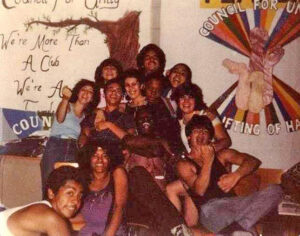
As membership at John Dewey High School grew beyond 100 students, CFU developed practices that remain part of its model: student leadership, committees, mentoring, manuals, induction and lifetime membership.
Its shared leadership structure gave more young people meaningful responsibility and opportunities to lead.
1980s - A Culture of Creativity & Belonging
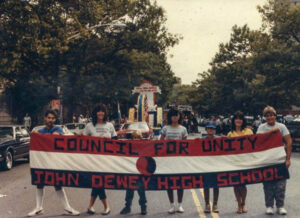
CFU became a center of leadership, cultural pride and creative expression at John Dewey. Students produced plays, artwork, performances, and celebrations that brought the school community together.
1982 - The Garden of Nations
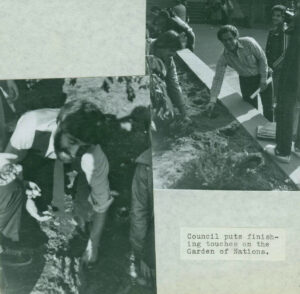
CFU students planted four weeping cherry trees at John Dewey, representing the African American, Asian American, Italian American and Latino communities they had brought together. Planted apart, the trees were meant to grow until their branches intertwined—a living reminder that unity takes care and commitment.
When two trees were vandalized, members replaced them. Decades later, their branches had grown together.
1983 - Council for Unity Becomes a Nonprofit
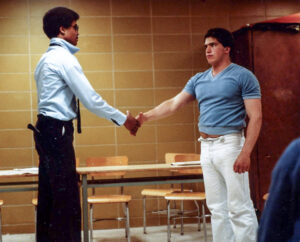
With support from the United Federation of Teachers, Council for Unity incorporated as a nonprofit organization. Original members served on its first Board of Directors, helping carry the work beyond one school.
Late 1980s - Building Unity Across Brooklyn
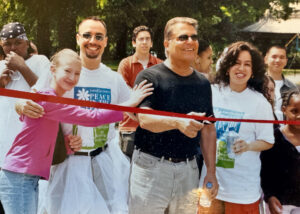
CFU expanded into Brooklyn schools, connecting more than 800 young people across racial and cultural lines. The network showed how youth leadership could help schools build relationships and respond to conflict.
1990 - A Governor Joins the Council Circle
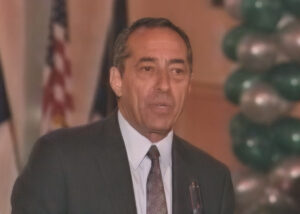
At CFU’s 15th Anniversary Induction, New York Governor Mario Cuomo delivered the keynote address and administered the induction oath to students from its growing school network.
1990-1995 - A Citywide School Network
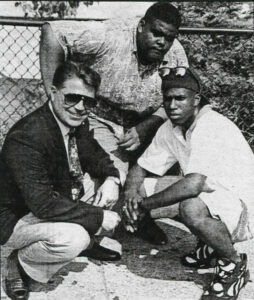
CFU’s School-Based Initiative expanded across New York City’s five boroughs. By 1993, 18 high schools had joined the network.
The feeder school model, introduced in 1992, connected elementary, middle, and high school programs so students could continue developing their leadership skills as they grew.
1993-1995 - Leadership Beyond the School Day
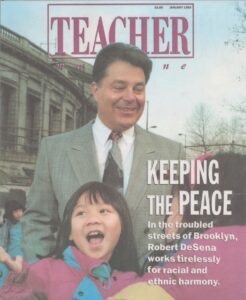
CFU alumni and staff Devonn Saunders and Timothy Tan helped establish Student Congress in 1993, creating an after-school space for young people to practice leadership and work together across schools.
The Bridges Program extended CFU’s work through community partnerships. By 1995, it connected young people with a broader network of youth-serving organizations.
1995-1998 - New Paths for Mentorship and Family Engagement
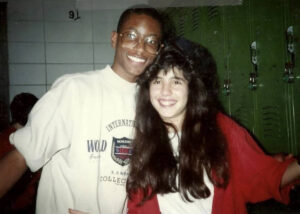
In partnership with Big Brothers Big Sisters, CFU’s Buddy Program connected middle school students with CFU alumni mentors.
CFU alumnus, Robin Choudhury launched the World of Work Program in 1996, introducing middle school students to career and college readiness skills and opportunities.
CFU also established a college chapter at SUNY Old Westbury in 1997. In 1998, parents inspired by their children’s experience formed the Family Senate, creating a place for families to participate in CFU’s work. This later grew into our Family Partnership Program.
1998-2017 - Reaching Young People in New Settings
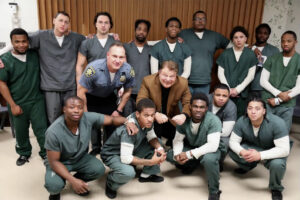
CFU brought its community-based model to Leake & Watts, a youth residential treatment center, in 1998. In 2002, its work expanded to Sing Sing Correctional Facility, followed by correctional facility programs at Brookwood and Rikers Island.
These efforts adapted CFU’s emphasis on relationships, responsibility, and personal growth for people in residential and correctional settings.
2000s - Strengthening Community Relationships
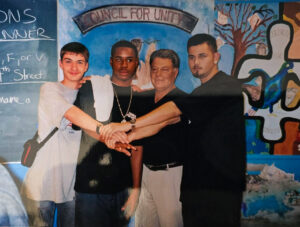
CFU developed a Police Partnership Curriculum to bring young people and local precincts into dialogue and improve relationships between youth and the NYPD.
CFU Speakers Bureau brought personal stories of transformation and messages of unity to New York City schools from 2008 to 2018. CFU also expanded into Long Island schools, extending its reach beyond the five boroughs.
2020 - Helping Young People Face Their Dragons
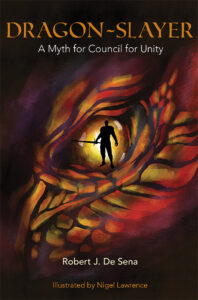
Robert J. DeSena’s Dragon-Slayer: A Myth for Council for Unity gave CFU another way to explore the challenges young people face, particularly with younger students. Through a story and guided group activities, students identify the “dragons”—such as fear, negative labels, or peer pressure—that can hold them back. They discuss how to seek support, recognize their strengths and take steps toward their goals.
The myth and its accompanying curriculum supplement CFU classroom lessons. DeSena’s book Chrysalis, Princess of Possibilities is also used as a resource in CFU’s work with young people.
2025 - Council for Unity Celebrates 50 Years

For over five decades, Council for Unity has remained committed to our founding vision. Generations of young people have passed through our programs, developing the skills to lead, communicate effectively, and resolve conflict peacefully. Many have gone on to become mentors, educators, community leaders, successful professionals and advocates—continuing the cycle of unity that began in 1975.
From one courageous idea to a lasting impact, Council for Unity continues to prove that when people come together, transformation is possible.
Council for Unity stands as both a legacy and a living movement—rooted in its history, yet continuously evolving to meet the needs of a changing world. Today, CFU programs operate in schools and communities across New York and beyond, continuing to transform lives through connection, leadership, and shared responsibility.
The work that started in 1975 is far from finished.
Today - A Model That Continues to Grow
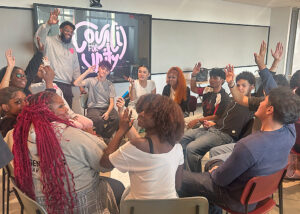
CFU continues to adapt its model to meet the needs of young people and schools. Following the COVID-19 pandemic, staffer, Kyle Harmon developed an approach that supports multiple CFU chapters within a school, beginning at the Dr. Martin Luther King, Jr. High School. That approach now informs programming across much of CFU’s network.
From six students at John Dewey High School to a growing network of young leaders, CFU’s history reflects a lasting conviction: young people can build the relationships and leadership needed to create unity.